Bladder leakage · incontinence
Three kinds of leakage, three different answers.
Leaking when you cough or lift is a different problem from leaking on the way to the bathroom. Naming the type is the first step to the right treatment.
Urge leakage
Caused by an overactive bladder muscle or nerves: urgency followed by leakage. Our urologists treat it with medicines, bladder Botox or an InterStim sacral nerve implant.
02Stress leakage
Here the sphincter that holds urine in is weak, so a cough, a laugh, a run or picking something up pushes urine out. In women, midurethral slings are one option. Men who develop stress leakage have usually had prostate surgery or radiation; for them, our urologists can place a male sling or an artificial sphincter used for male leakage.
03Overflow leakage
When the bladder doesn’t empty and urine leaks out constantly, from nerve or muscle problems or constipation. The cause is investigated before treatment is chosen.
04Where procedures happen
Procedures for these conditions happen at the Johns Creek surgery center rather than a hospital, including for patients first seen in Cumming.
Three patterns of leakage, which is why the first questions matter
Leakage when you cough, laugh, or lift is stress incontinence. Leakage that follows a sudden, hard-to-delay urge is urge incontinence, often part of overactive bladder. A mix of both is common, and a bladder that overflows because it cannot empty is a different problem again. Our urologists can help if any of those patterns is changing how you dress, travel, or sleep.
You can be seen at 10730 Medlock Bridge Rd or at the Cumming Clinic, 4150 Deputy Bill Cantrell Memorial Rd Suite 180. The first visit sorts the pattern with a history, an exam, and, when useful, a diary, a urine test, a post-void residual, or urodynamics.
Treatments our urologists offer, matched to the pattern
For urge-related leaking, Advanced Urology uses lifestyle measures, medicines, pelvic-floor therapy, bladder Botox, InterStim, and Altaviva. For stress leaking in women, pelvic-floor work and midurethral slings are on the list; for men, especially after prostate surgery, we discuss slings, an artificial urinary sphincter, and ProACT. We will not offer a sling for a problem that is actually urgency, or a bladder-calming medicine for a problem that is actually stress leakage, without saying why the match is right.
When to come in, and a few things to have ready
Schedule a visit when pads, frequent changes of clothes, or a shrinking map of places you are willing to go have become part of the week. Phone 678-344-8900 or book online. If you suddenly cannot urinate, or if bleeding is heavy, that is emergency-department care.
A two-day log of leaking, voiding, and drinking, plus a medicine list and identification, will make the visit more precise. Dr. T. Casey McCullough and Dr. Herman Bagga both discuss leakage in official videos below; Dr. McCullough practices in this Johns Creek building, and Dr. Bagga at Cumming.
Will I be examined on the first visit?
Yes, a focused exam is a usual part of this evaluation. We will explain what we are doing and why before we begin.
Is surgery the first recommendation?
No. Many people start with training, medicines, or pelvic-floor work. A procedure is for when the pattern and your goals point that way after we have the findings.
Can men and women both be seen for leaking on this page’s pathway?
Yes. The cause often differs — for example, leakage after a prostate operation in men — but both are urology visits in these offices.
Official videos on leaking, including two urologists who practice in these offices
Dr. T. Casey McCullough and Dr. Herman Bagga, who practice at Johns Creek and Cumming, appear in official practice videos about leaks and stress incontinence. A third official video explains ProACT after prostate surgery. Use them as orientation, not as a self-assigned treatment.
- Watch: Let's Talk about Leaks with Dr. Casey McCullough
What the video covers. This official Advanced Urology video is titled "Let's Talk about Leaks with Dr. Casey McCullough." Dr. Casey McCullough discusses urinary leaks.
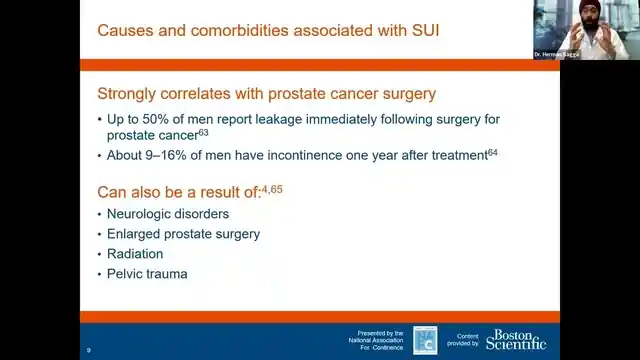 Watch: Dr. Herman Bagga discusses options for Urinary Stress Incontinence
What the video covers. Titled "Dr. Herman Bagga discusses options for Urinary Stress Incontinence." The official video features Dr. Herman Bagga on stress urinary incontinence, including how it shows up and how it can be treated, as stated in the public description.
 Watch: #004 - Leaking After Prostate Surgery? How ProACT Puts You Back in Control
What the video covers. Titled "#004 - Leaking After Prostate Surgery? How ProACT Puts You Back in Control." The public description frames the episode as a look at ProACT, also called Adjustable Continence Therapy, for men who leak after prostate surgery, and it mentions a balloon-based system.
Can a leakage visit start in Cumming?
Yes. Women and men with leakage are seen at both offices. Procedures are scheduled at Johns Creek.
What should I bring?
A medicine list, notes about when leakage happens, and any prior urodynamic or pad-test results you have.
Do you see both women and men for leakage?
Yes. The evaluation and the treatments we discuss differ, and we will be specific about your situation rather than giving a single plan for every patient.
When should leakage be treated as emergency care?
Leakage itself is clinic work. If you cannot urinate, or have fever with pain, go to an emergency department.
Whenever a visit would help, the Johns Creek and Cumming teams are a phone call or a booked appointment away.