Men’s health · Peyronie’s disease
Peyronie’s disease: a clear look at what it is, and what we can offer
Peyronie’s disease is curvature of the penis caused by scar tissue. Our urologists discuss it privately, in plain language, and stay with the treatments Advanced Urology actually provides, without pressure and without promises about results.
What Peyronie’s disease is
Scar tissue, sometimes called a plaque, can form along the penis and pull it into a bend. Many cases follow an injury, such as bending during sex. Limited blood flow can make it harder for those small tears to heal, so scar forms in their place. The exact cause is not always clear.
Two phases our urologists distinguish
In the active phase, which typically lasts 12 to 18 months, the scar is still forming. Pain can worsen, and the bend and the plaque can still change. The aim in this phase is to limit further curvature or scarring, support blood flow, and treat pain.
In the chronic phase, the plaque and the curvature have been stable for at least six months. Pain with intercourse, if it is present, may be related to the bend or to erection trouble. Treatment then turns to straightening the curvature and addressing any erectile dysfunction that accompanies it.
Treatments we can talk through
During the active phase, options include oral medicines that support blood flow, a vacuum erection device, and traction or modeling to gently straighten and stretch. Topical medicines such as verapamil are rarely effective.
Once the disease has stabilized, our urologists can talk through injection therapy with Xiaflex, an in-office treatment that breaks down collagen in the scar; surgical straightening, including plication or plaque incision and grafting, depending on the degree of curve; and, when Peyronie’s disease and erection trouble are both present, a penile implant, which can address both concerns in one operation. We do not promise a particular result. Risks, including changes in length or sensation, are part of the conversation before anyone agrees to a procedure.
A longer discussion of implants in the setting of Peyronie’s disease is on our penile implant article.
Two official videos that explain Peyronie’s disease
These official Advanced Urology videos explain Peyronie’s disease, including a talk by Dr. Marc Greenstein, who practices with Advanced Urology. They are here as education beside this page; your curve still needs an exam in one of our offices.
 Watch: #014 - Lumps, Bumps or Curves - Understanding Peyronie's Disease
What the video covers. Titled "#014 - Lumps, Bumps or Curves - Understanding Peyronie's Disease." The public description says the episode discusses Peyronie's disease, a condition that causes abnormal curvature of the penis due to the buildup of scar tissue, and that it can affect sexual function.
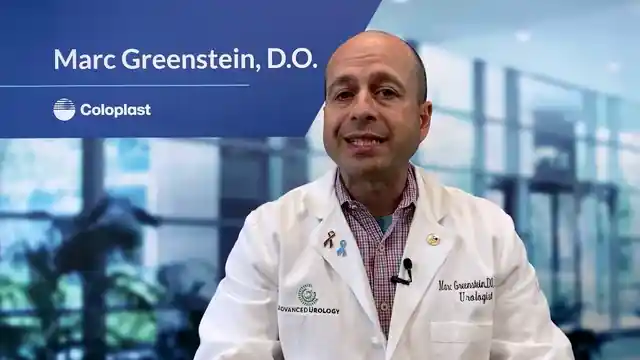 Watch: Dr. Marc Greenstein on Peyronie's Disease
What the video covers. This official Advanced Urology video is titled "Dr. Marc Greenstein on Peyronie's Disease." Dr. Marc Greenstein discusses Peyronie's disease.
Questions we are often asked
What is Peyronie’s disease, in plain language?
It is a curvature or deformity of the erect penis caused by scar tissue in the tunica. Some men also have pain or erectile difficulty. We confirm the diagnosis with a history and an exam, and then talk about observation, medicine, or a procedure we actually offer.
Do I need treatment if the curve is mild?
Not always. A stable, mild curve that does not interfere with sexual activity can be watched. Treatment is for pain, a curve that makes intercourse difficult, or erectile dysfunction that is part of the same picture. We will say when watching is reasonable and when it is not.
Where should I start for this evaluation?
Either Johns Creek or Cumming can start the evaluation. If a procedure is later recommended, we will schedule it at the office where that procedure is performed and review the plan with you first.
Can I be seen for Peyronie’s disease in Cumming or Johns Creek?
Yes. Clinic evaluation can start at either office. If a procedure is recommended, the date is set at Johns Creek.
What should I bring?
A government photo ID, the insurance card you use, a current medicine list, and notes about when the curvature or lump began and whether erection difficulty is part of the picture.
Do you talk about injections and surgery?
We discuss the treatments we actually offer, including options named on our official pages, and we will say when a treatment is not something we provide here. The visit is the place for a recommendation.
What if I also have erection difficulty?
Tell us. Erectile dysfunction and Peyronie’s disease can be evaluated together. Our erectile dysfunction page covers that side of the visit.
Is this an emergency?
A curve or a lump that has been present is clinic work. Sudden severe pain or swelling should be evaluated in an emergency department.
Whenever a visit would help, the Johns Creek and Cumming teams are a phone call or a booked appointment away.