You noticed blood
Seeing blood in your urine, checked in Johns Creek and Cumming
Pink, red, or cola-colored urine in the bowl, on tissue, or on a pad can be startling, even when it fades by the next trip to the bathroom. A laboratory can also report blood that you never saw. Our urologists at the Johns Creek Clinic & Surgery Center and at the Cumming Clinic review both situations, because a cause that has quieted down can still be there.

What blood in the urine can look like
What people notice varies. Some see a faint pink tint after wiping. Some see a clearly red stream, or a brown, tea-colored change that lasts for hours. Others see a streak on tissue and nothing in the bowl. A pad or underwear stain can be the first clue. If you menstruate, it can be hard to tell menstrual blood from urinary blood; mention the timing when you call so we can plan the visit well.
A clinic or hospital laboratory may also report blood on a dipstick or under a microscope when the urine looks ordinary to you. That finding still belongs in a urology visit. We do not treat a single “it already cleared” day as a reason to skip the workup. The question is what produced the blood, not whether the color has already settled.
Visible blood and blood a lab found are not the same visit, but both matter
When you can see a color change, we plan a visit that often includes imaging and a look into the bladder with a scope, chosen to your age, medicines, and history. When the blood is microscopic, the same tools can still be used, but the sequence may differ. Either way, we start by confirming that the blood is really from the urinary tract, then we decide which test answers the next question.
This page is for the moment you first notice a color change or a lab flag. For a fuller walk-through of how hematuria is evaluated in these offices, including how we use cystoscopy and imaging, read our blood in the urine evaluation page. The two pages work together; they are not two versions of the same visit.
Why we still want to see you after the color has faded
A stone can pass a brief burst of blood and then sit quietly. An infection can declare itself and then ease with a medicine started elsewhere. Prostate tissue can bleed and then stop. A bladder finding can produce a single episode and then leave the urine looking clear again. Waiting for a second episode to “prove” the first one matters can delay a diagnosis that is easier to treat sooner.
Bring any laboratory printouts, discharge papers, or images you already have, even if they were done at another facility. Repeat testing is not automatic. We use what you already completed when it still answers the question in front of us.
What the first visit is like in these offices
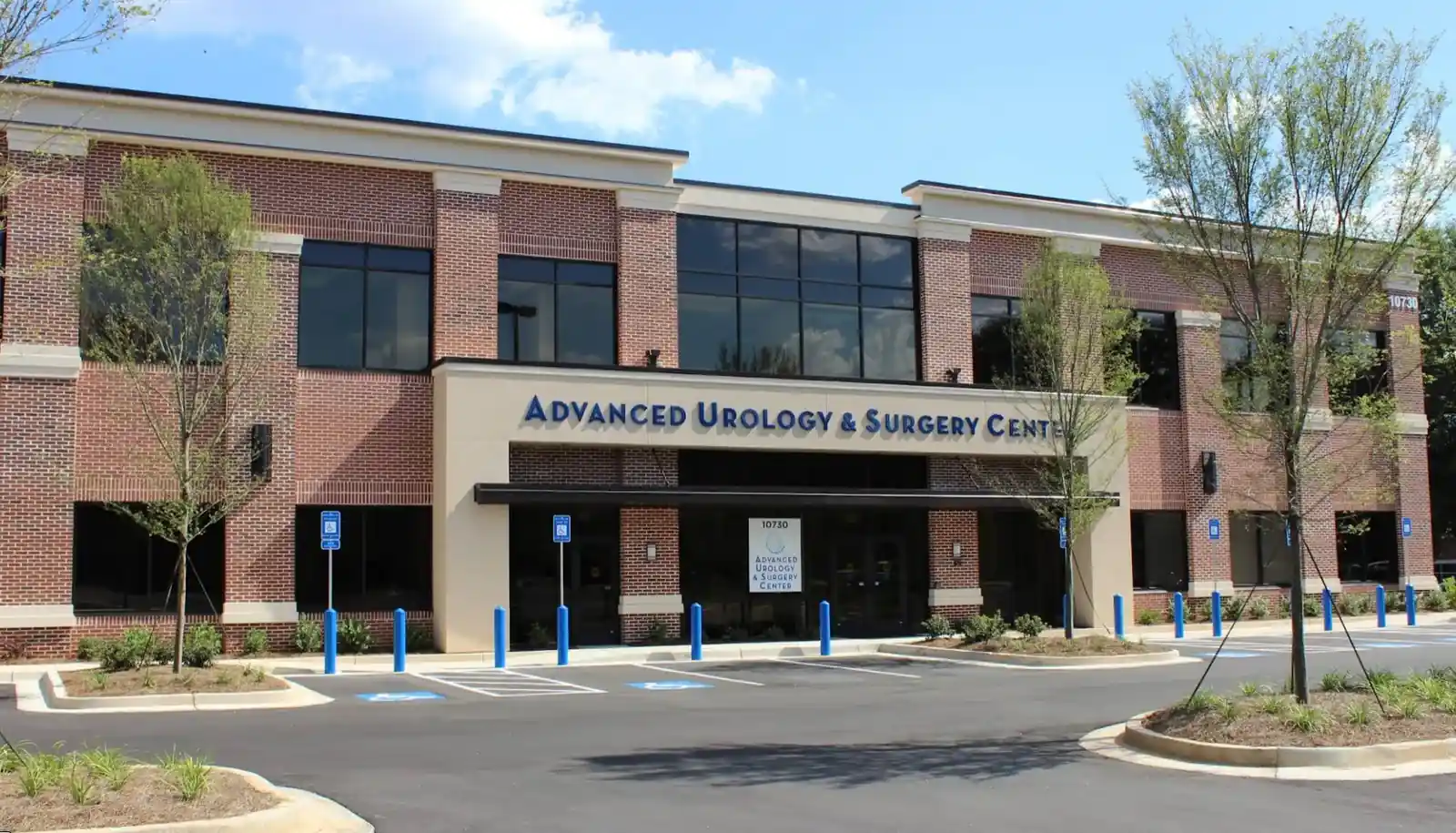
You can start at 10730 Medlock Bridge Road in Johns Creek or at 4150 Deputy Bill Cantrell Memorial Road, Suite 180, in Cumming. The first appointment is a conversation and an exam, plus the urine checks we can complete while you are here. We will ask when you first noticed the change, whether it hurt, whether you have clots, fever, or trouble emptying, and which medicines you take, including blood thinners. If a procedure needs an operating room, that date is set at the Johns Creek surgery center, the same building as the Johns Creek clinic.
Call 678-344-8900 or book online, and we will look for the earliest opening we can set. We do not promise a visit on the day you call. If you are passing large clots, cannot empty, feel faint, or have fever with pain, that is emergency-department care. Dial 911 or go to a hospital now; a clinic visit can follow once you are stable.
What can produce the blood, in ordinary language
A stone moving through the kidney or ureter is a frequent source, often with flank or groin pain. An infection can add burning or a fever. In men, prostate tissue can bleed, sometimes with a slower stream. In women and men, the bladder itself can be the source, from irritation or, less often, a tumor. Injury, recent instrumentation, or heavy exercise can also play a part. We will not guess from the color alone. The plan after the visit depends on what we find, which may lead to our pages on kidney stone pain, stone treatment, or bladder cancer when those are the right next reads.
A related official video on blood in the urine
An official Advanced Urology video on this topic.
 Playing: #001 - Hidden Clues: Understanding Blood in the Urine
What the video covers. Titled “#001 - Hidden Clues: Understanding Blood in the Urine.” The public description addresses microscopic hematuria: blood found under a microscope rather than by the unaided eye, which may be harmless or may point to infections, stones, or other conditions.
Visits for blood in the urine are seen by our urologists at these two offices, including Dr. Neal Patel, Dr. T. Casey McCullough, and Dr. Nicholas Farber in Johns Creek, and Dr. Patel, Dr. Herman Bagga, Dr. Rut Patel, and Dr. Kushan Radadia in Cumming. Operating-room procedures are scheduled at Johns Creek.
Questions we are often asked
I saw pink or red urine once, and it has already cleared. Should I still come in?
A single episode that has already faded still deserves a visit at Johns Creek or Cumming, because the cause may still be there even when the color has settled. Pink, red, or cola-colored urine in the bowl, on tissue, or on a pad can be startling, even when it fades by the next trip to the bathroom. A laboratory can also report blood that you never saw. Some see a faint pink tint after wiping.
What is the difference between blood I can see and blood a lab found?
Visible blood is a color change you can see. Microscopic blood is reported on a test when the urine looks ordinary.
Could this just be from my period?
It can be hard to tell menstrual blood from urinary blood. Tell us the timing when you book so we can plan the visit, and we will sort that out rather than having you wait for another episode.
Do I start in Cumming or in Johns Creek?
Either office can begin the evaluation. If a procedure needs the operating room, the date is set at the Johns Creek surgery center, in the same building as the Johns Creek clinic.
Does blood in the urine always mean cancer?
Stones, infection, and prostate bleeding are common sources. We still look carefully, because we will not assign a cause without checking.
When should I go to the emergency department instead of booking a clinic visit?
If you cannot urinate, are passing large clots, feel faint, or have fever with pain, dial 911 or go to a hospital emergency department now. A clinic appointment can come after you are stable.
Whenever a visit would help, the Johns Creek and Cumming teams are a phone call or a booked appointment away.