Stream and night trips
A weak urine stream, trouble urinating, or peeing at night, checked in Johns Creek and Cumming
A weak urine stream that starts slowly, stops and starts, or leaves you standing longer than you used to, often arrives with trips to the bathroom at night. Trouble urinating — a delay before the stream starts, straining, or a sense that you have not emptied — belongs in the same visit. Our urologists at Johns Creek and Cumming look at the whole pattern and talk through enlarged prostate treatment options we actually provide when that is part of the picture.
What a weak urine stream and trouble urinating can feel like
People describe a weak urine stream, a delay before the stream starts, a need to strain, or dribbling after they think they have finished. Trouble urinating can also mean returning to the bathroom soon after, or taking a long time to empty. Some feel they have not emptied and return to the bathroom soon after. Night-time trips may be once, then twice, then often enough that sleep is broken. These changes can creep in slowly, which is why many people wait until a long car trip or a bad night makes the pattern hard to ignore.
Women can have a weaker stream or frequent night-time waking as well, and the cause is not always an enlarged prostate. The first visit is about the pattern, not a label you have to arrive with. If bladder leakage is the larger problem, start with our bladder leakage page; we can still cover the stream in the same appointment.
Why we look before we talk about procedures
A weak stream can come from prostate enlargement, a narrowing in the urethra, a bladder that is not emptying well, medicines that affect urinary function, or more than one of these at once. Night-time waking can travel with that obstruction, with a bladder that is sensitive, or with fluid and sleep habits. We take a history, examine you, and add in-office tests when they will change the plan, rather than jumping from a story about night-time trips to a procedure date.
If a PSA test is already on file, or if your age and history make that blood test part of a careful visit, we will review it and, when needed, point you to our pages on a high PSA result and high PSA and biopsy. A PSA conversation and a stream conversation can share the same appointment.
Treatments we provide when the prostate is the cause
When the prostate is blocking the flow, enlarged prostate treatment often starts with medicines that relax or shrink prostate tissue, if you have not already tried them. Procedures our urologists provide include UroLift implants that hold the tissue open, HoLEP and ThuLEP laser procedures that remove blocking tissue, and TURP. We will explain which of those fits your prostate size, your symptoms, and what you want from recovery, rather than offering a single path to everyone.
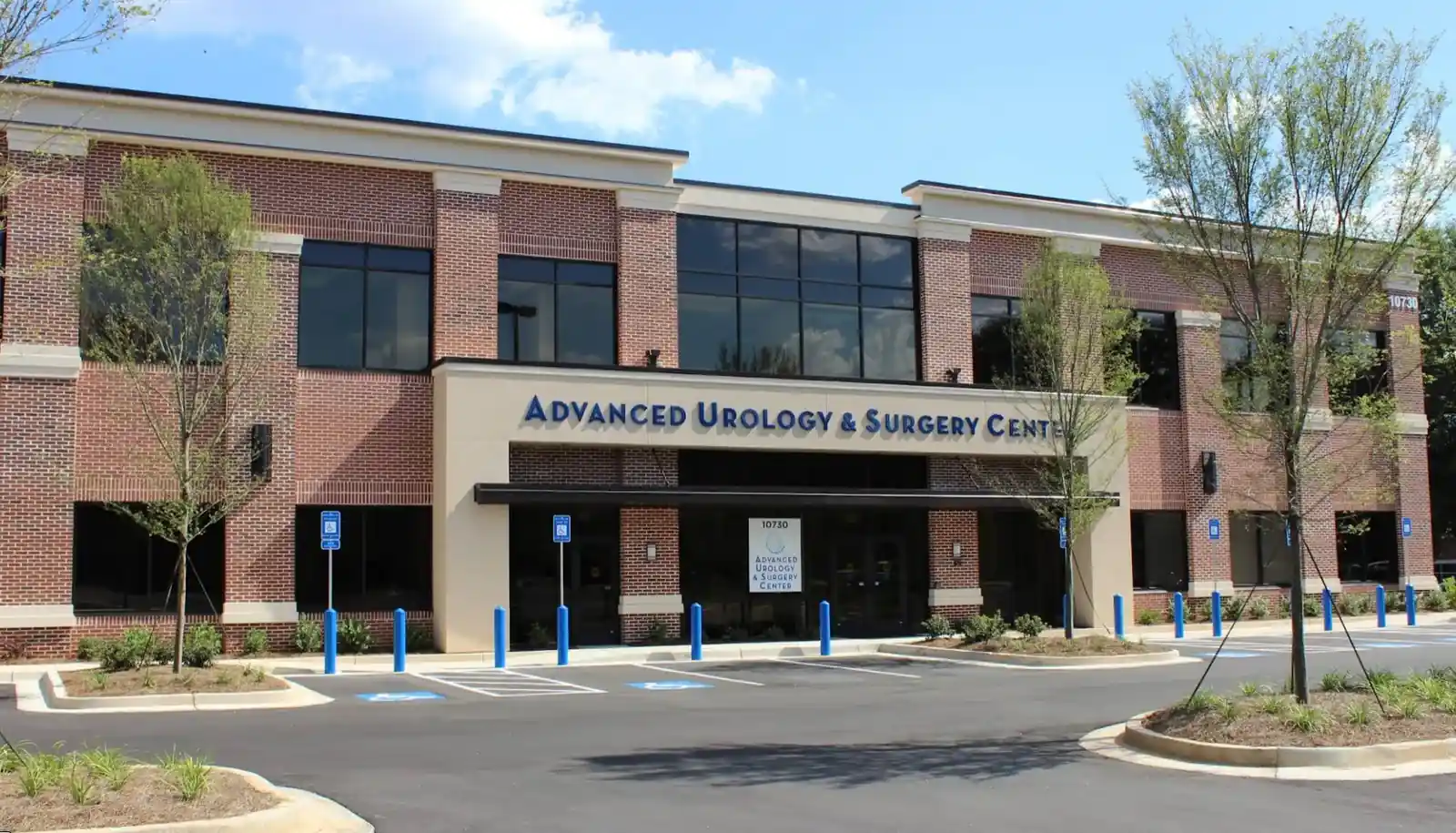
The consult can be at either office. Procedures that need the operating room are done at the Johns Creek surgery center, at 10730 Medlock Bridge Road, in the same building as the Johns Creek clinic. For a fuller map of enlarged-prostate care in these offices, read our enlarged prostate (BPH) page and, if implants are under discussion, our UroLift page.
How to book, and what belongs in the emergency department
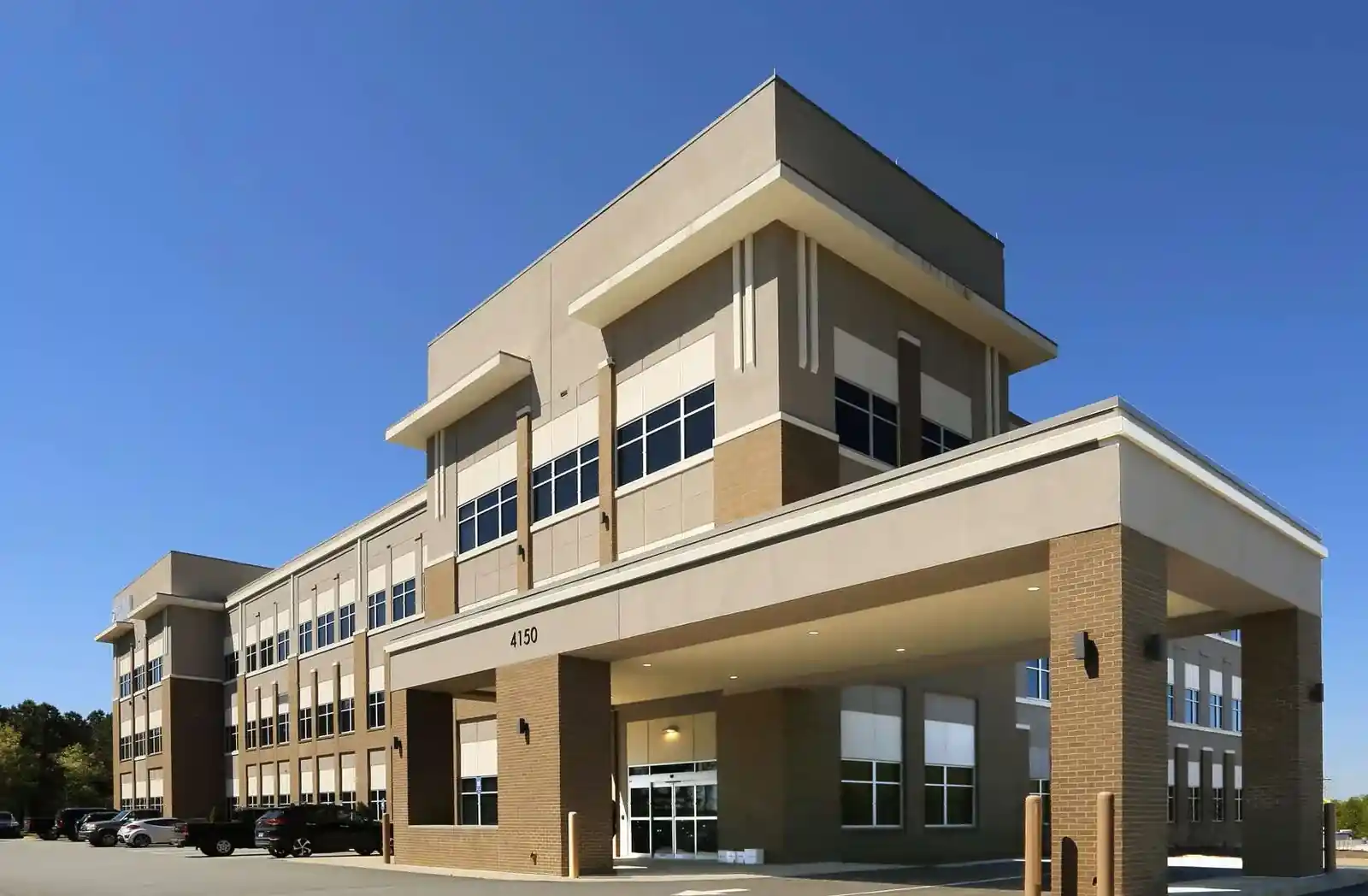
You can start at Johns Creek or at 4150 Deputy Bill Cantrell Memorial Road, Suite 180, in Cumming. Call 678-344-8900 or book online, and we will look for the earliest opening we can set. We do not promise a visit on the day you call. Mention a weak stream, night-time trips, or both when you schedule, and tell us if you already take a prostate medicine or have had a catheter.
If you suddenly cannot urinate, that is emergency-department care. Dial 911 or go to a hospital now; a catheter may be needed there, and a clinic visit can follow once you are able to empty or have been drained. Fever with pain, or heavy bleeding, also belongs in the emergency department rather than in a scheduled slot.
What to bring, and what happens after the first visit
Bring a medicine list, any prostate or bladder testing you already have, and a rough count of night-time trips if you have been keeping one. After the first visit you should leave with a next step: a medicine plan, a follow-up, further testing, or a procedure discussion with a clear reason. We will not start a medicine or a procedure without explaining the trade-offs, including effects on sexual function when those apply.
If urgency or leaking is mixed into the same nights, we can address that in the same plan and point you to our overactive bladder and bladder leakage pages for more detail. The goal of the first visit is a pattern we both understand and a step that matches it.
A related official video on a weak stream and night-time trips
An official Advanced Urology video on this topic.
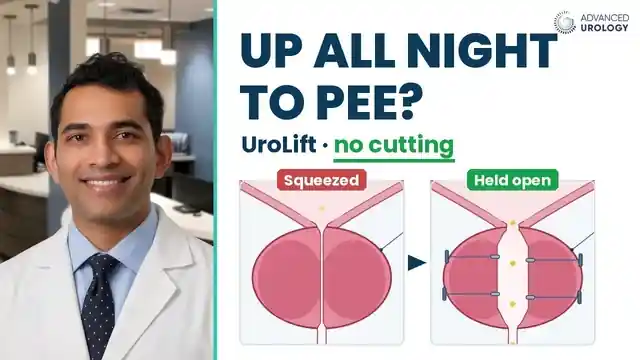 Playing: UroLift in 60 Seconds: Opening an Enlarged Prostate Without Cutting
What the video covers. Titled “UroLift in 60 Seconds: Opening an Enlarged Prostate Without Cutting.” The public description addresses getting up at night to urinate and a weak stream, and explains how UroLift implants can hold enlarged prostate tissue open.
Visits for a weak stream or night-time urination are seen by our urologists at these two offices, including Dr. Neal Patel, Dr. T. Casey McCullough, and Dr. Nicholas Farber in Johns Creek, and Dr. Patel, Dr. Herman Bagga, Dr. Rut Patel, and Dr. Kushan Radadia in Cumming. Operating-room procedures are scheduled at Johns Creek.
Questions we are often asked
I have a weak urine stream and I get up at night. Should I come in?
A weak urine stream, trouble urinating, and night-time trips are a common reason to be seen at Johns Creek or Cumming. We look at the whole pattern before we talk through medicines or a procedure.
Does this always mean my prostate is enlarged?
Enlargement is a frequent cause in men, but a weaker stream or night-time waking can have other explanations, including in women. The first visit is how we sort that out.
What enlarged prostate treatment do you offer if the flow is blocked?
Enlarged prostate treatment often starts with a conversation about medicines. Procedures our urologists provide include UroLift, HoLEP, ThuLEP, and TURP.
Can I be seen in Cumming?
The first visit can be at either office. If a procedure later needs the operating room, that date is set at the Johns Creek surgery center.
I have trouble urinating, or I suddenly cannot urinate at all. What should I do?
Trouble urinating — a slow start, a weak urine stream, or several night-time trips — is clinic work at Johns Creek or Cumming. If you suddenly cannot urinate at all, that is emergency-department care: dial 911 or go to a hospital now. A clinic appointment can follow once you are able to empty or have been drained.
Will you promise that I will sleep through the night after treatment?
We will tell you what a given treatment is for and what recovery can feel like, and we will be honest about the limits of any one option. Night-time trips can have more than one cause.
Whenever a visit would help, the Johns Creek and Cumming teams are a phone call or a booked appointment away.