Women's bladder and pelvic health
Women's bladder and pelvic health in Johns Creek and Cumming
Bladder leakage, a sudden “gotta go” urge, frequent urination, kidney stones, and blood in the urine are among the reasons women see our urologists in Johns Creek and Cumming. The visit is with the same urologists who practice at these offices, and the plan is built around how the problem actually shows up for you.

Who you will see
Our urologists at these two offices are Dr. Neal Patel, Dr. T. Casey McCullough, Dr. Nicholas Farber, Dr. Herman Bagga, Dr. Rut Patel, and Dr. Kushan Radadia. They see women for bladder leakage, frequent urination, stones, blood in the urine, and pelvic-floor urinary problems. Physician assistants may be part of the visit, and we will say who you are scheduled with when you book.
If sitting down with a particular clinician matters to you, say so when you book and we will work with the openings we have. The care itself — the history, the exam, the testing, and the treatment options — is what this page is for.
Bladder leakage, frequent urination, and the “gotta go” urge
Bladder leakage with a cough, a laugh, or a lift is a different pattern from a sudden urge that is hard to hold, and the options differ. Frequent urination, including short gaps between trips in the day or several wakes at night, often travels with that second pattern. Our bladder leakage symptom page and bladder leakage treatment page go through stress leakage, urge leakage, and mixed patterns in more detail.
The first visit is a careful history of how the leak happens, a urine check, and, when it would change the plan, a look at how well the bladder empties. Pelvic floor therapy is something we discuss when the pattern points that way. Medicines, bladder Botox, InterStim, and Altaviva enter the conversation when urgency and urge leakage have not settled with simpler steps; those tools are covered on our overactive bladder treatment page.
Kidney stones, blood in the urine, and other reasons women come in
Women also come to these offices for kidney stones, blood in the urine, recurrent urinary infections, and questions about a bladder or kidney finding on a scan. Stone pain, lithotripsy, and ureteroscopy are handled the same way as on our kidney stone doctor page: emergency signs go to a hospital, and procedures are done at the Johns Creek surgery center. Blood you can see, or blood a lab found, still deserves a visit even if the color has already cleared; the work-up can include a urine test, imaging, and, when it is the careful next step, a cystoscopy.
Advanced Urology’s women’s urology list also includes interstitial cystitis, pelvic pain, and pelvic organ prolapse. If those are part of your history, we will say what we evaluate here and how we coordinate any care that belongs with another specialist. We do not invent an offering we do not provide.
How a first visit is set up at these offices
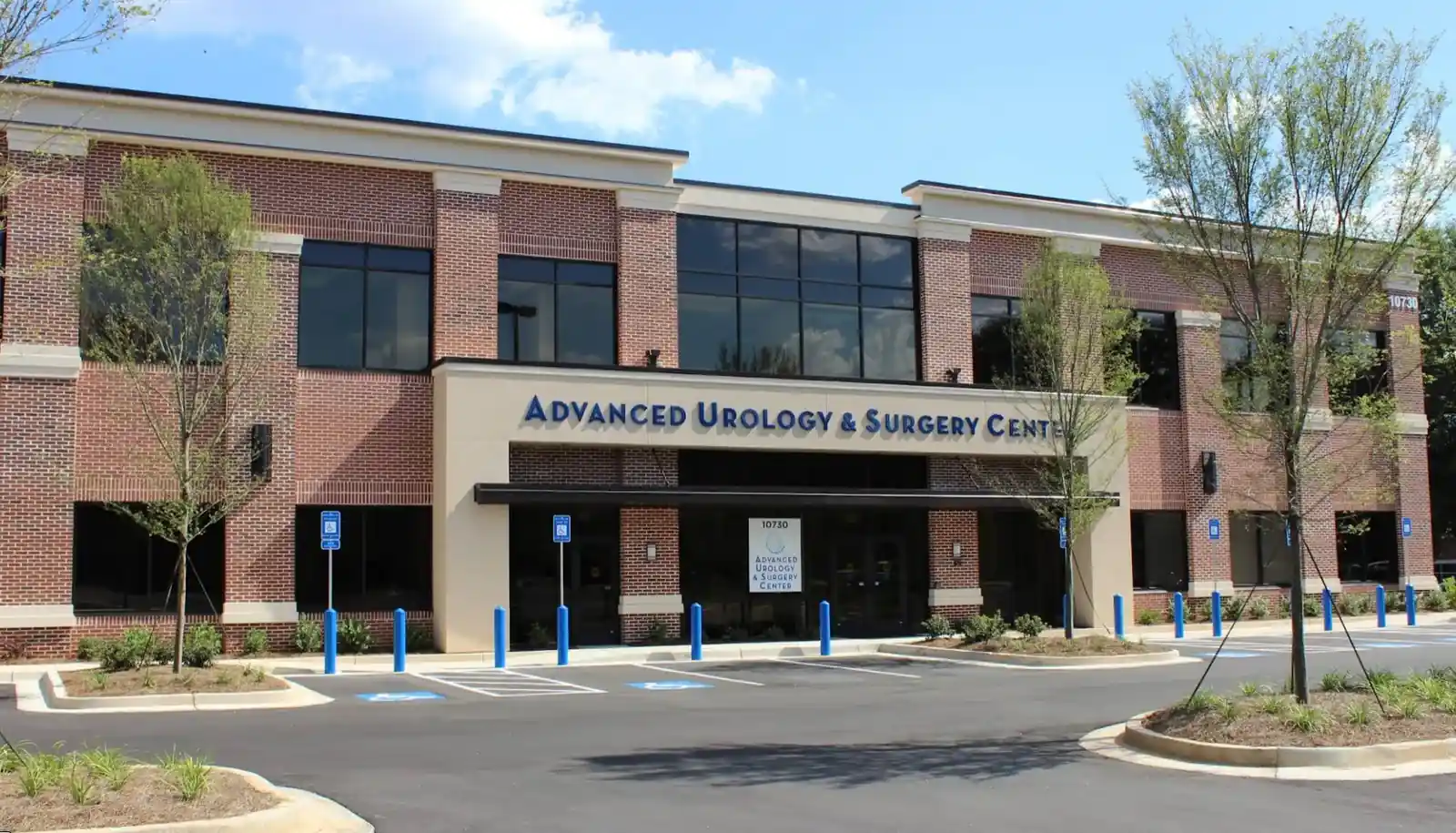
A first visit for women’s bladder or pelvic health can be at Johns Creek or at Cumming. Bring a medicine list, any urine or imaging reports, and a simple note of when the leaking, pain, or bleeding happens if that is hard to recall in the room. If a later procedure needs an operating room, that date is set at the Johns Creek Clinic & Surgery Center, in the same building as the Johns Creek clinic.
If you suddenly cannot urinate, have heavy bleeding, feel faint, or have fever with pain, dial 911 or go to a hospital emergency department now. Everyday leakage, frequent urination, or a resolved episode of pink urine is clinic work.
An official video with Dr. Herman Bagga on options for urinary stress incontinence
An official Advanced Urology video on this topic.
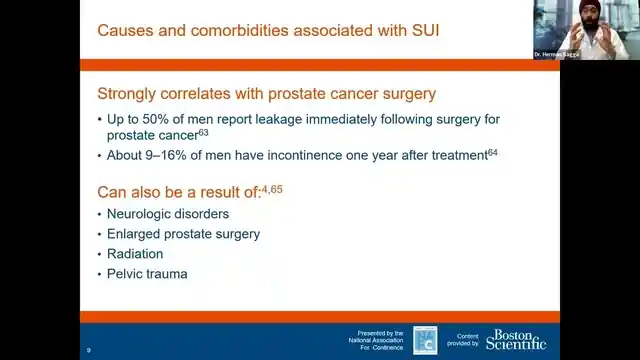 Playing: Dr. Herman Bagga discusses options for Urinary Stress Incontinence
Women are seen by the urologists who practice at these two offices: Dr. Neal Patel, Dr. T. Casey McCullough, and Dr. Nicholas Farber in Johns Creek, and Dr. Neal Patel, Dr. Herman Bagga, Dr. Rut Patel, and Dr. Kushan Radadia in Cumming. Physician assistants work alongside them as part of the same visit when that is how the appointment is set.
Questions we are often asked
What are women seen for at Johns Creek or Cumming, and what happens at the visit?
Women come to our Johns Creek and Cumming offices for bladder leakage, frequent urination, stones, blood in the urine, and infections that keep coming back. We begin by hearing how the symptoms show up, then test the urine and see how fully the bladder empties. From there we talk about medicines, pelvic-floor therapy, office procedures, or a later date in the Johns Creek operating rooms when that is the next step.
Can a first visit for bladder leakage be in Cumming?
A first visit for bladder leakage or frequent urination is welcome at the Cumming Clinic. History, a urine check, and a look at emptying can all start there. If a later procedure needs the Johns Creek operating rooms, we set that date from the Cumming conversation.
Is pelvic floor therapy something you discuss with women?
Yes, when the pattern of leakage or pelvic symptoms points toward a pelvic-floor problem, we talk about therapy as part of the plan. It is not the one tool we use, and it is not the right first step for every kind of leak. We will say when a medicine, an office procedure, or more testing should come before or alongside it.
Do you treat kidney stones and blood in the urine in women as well as bladder leakage?
Yes, stones, visible or microscopic blood, and recurrent infections are regular reasons women come to these offices. The work-up and, when needed, lithotripsy or ureteroscopy at Johns Creek follow the same sequence we use for any stone or bleeding evaluation. Our condition pages on those topics stay in the same set of links.
When is bladder leakage in women an emergency?
Ordinary leaking with a cough or a sudden urge is clinic work, even when it is upsetting. A sudden inability to urinate, heavy bleeding, fainting, or fever with pain belongs in a hospital emergency department. A clinic appointment can come once those warning signs have been treated.
What should I have ready for a first women’s bladder visit?
A current medicine list, a photo ID, and any urine tests, bladder diaries, or pelvic imaging you already have will help us avoid repeating a study without a reason. A few notes on when the leak or the urge happens — a cough, a key in the door, a night-time wake — often save time in the room. If a report is missing, come anyway and tell us where it was done.
Whenever a visit would help, the Johns Creek and Cumming teams are a phone call or a booked appointment away.